Wednesday, July 23, 2014

Finland

Karelian Hot Pot with Lingonberry Preserves and Mashed Potatoes

I made this dish on Tuesday, July 15, 2014 for Andy and me.  According to wikipedia, Karelian Hot Pot has been the national dish of Finland since 2007.  I found the recipe here and halved it.  It was very simple to prepare, requiring only a small bit of slicing and a slow cooker.  Given the unseasonably cool temperatures, this stew was surprisingly appropriate.  I heard on MPR that it hadn't been as cool on July 14 in Minnesota as it was yesterday since 1884.  It feels like fall!

This was good, but a little bland.  The allspice and pepper didn't really permeate the meat at all.  The meat was tender, but rather gray looking.  I thought that the lingonberry preserves were what really brought all of the components together.  The bright, tart, sweet flavor added a lot to the meat and potatoes; the preserves also added some color to an otherwise "blah" plate.

 Ingredients:
- 1 T. olive oil
- 1/2 lb. beef, cut into 1" pieces (I used stew meat)
- 1/2 lb. lamb, cut into 1" pieces (I used leg)
- 1/2 lb. pork, cut into 1" pieces (I used shoulder)
- large onion, sliced
- 1 tsp. peppercorns
- 4 whole allspice
- 1 bay leaf, broken in half
- 1/2 tsp. salt
- 1 1/2 c. water
(mashed potatoes and lingonberry preserves for serving)

Directions:
1) Brown all of the meat in the olive oil.
2) Cover the bottom of a slow cooker with half of the onions.

3) Place half of the browned meat atop the onions.  Season with 1/2 tsp. peppercorns, 2 whole allspice, 1/2 of a bay leaf and 1/4 tsp. salt.

4) Repeat steps 2-3 with remaining ingredients.
5) Pour in water.  Cook on Low for 6 hours.

6) Serve with mashed potatoes and lingonberry preserves.
From Italy...super authentic, right?

Monday, July 7, 2014

Fiji

Kokoda

Kokoda is the national dish of Fiji.  It is very similar to a ceviche in that raw fish is "cooked" in acidic citrus juices.  I found a traditional recipe for kokoda here.

I made this recipe on Monday, July 7.  I thought it was okay - It wasn't super flavorful.  There was some heat, and I could definitely taste the lime.  I wanted the coconut flavor to come through more.  Andy ate one piece of fish and said, "I don't think I can eat this."  He thought it was too citrusy.  We're big fans of sushi, but this one didn't really do it for us.

Ingredients:
- 1 mahi mahi fillet
- 1/2 c. lime juice (for marinading)
- 1 c. coconut cream
- 1/2 c. lime juice (for serving)
- 2 T. finely diced shallots
- 2 T. finely diced red jalapeño
- 2 T. finely diced green jalapeño
- 2 T. finely diced cucumber
- 2 T. finely diced red chile pepper- 2 T. finely chopped cilantro
- 2 T. finely chopped tomato
- Salt and pepper to taste

Directions:
1) Dice the fish fillet into small cubes.  Place in a non-reactive container with the lime juice to marinade.  Cover and refrigerate for 12-24 hours until opaque and "cooked."
Before "cooking"
After "cooking"
2) Drain the lime juice and discard.
3) Combine coconut cream and lime juice into a mixing bowl.  Add the "cooked" fish to the liquid along with all of the other ingredients.  Stir until combined.
All ingredients added, but not stirred in
All stirred up!
4) Transfer to a serving dish.  Serves 4.


Monday, July 22, 2013

Faroe Islands

Sunfrid Jacobsen's Fish Casserole

This is another recipe I made in July 2013.

The national dish of the Faroe Islands is Puffin Stuffed with Rhubarb.  As I knew I would not be able to find puffin in Minnesota, I searched high and low for other recipes.  What I stumbled across was this travel blog.  I have no idea how traditionally Faroese this recipe is, I do know that it comes from a Faroese family.

It was tasty: rich and creamy.  I'd make it again.

Sunfrid Jacobsen's Fish Casserole

Ingredients:
- 2 lb. Cod
- salt and pepper
- 3 T. oil
- 1 c. cream
- 1/3 c. mustard
- 4 T. ketchup
- 1 tsp. curry powder
- 1 tsp. vinegar

Directions:
1) Salt and pepper the fish and place in a baking dish.

2) Combine oil, cream, mustard, ketchup, curry, and vinegar.

3) Pour over fish.

4) Bake at 350 degrees for 45 minutes.

5) Serve over potatoes.

Monday, July 15, 2013

Falkland Islands

Smoko Cake
I've seemed to develop a bad habit of cooking and not updating for a year, only to pick up again in June or July.  As such, I actually baked this cake last July 15.  Oh well.

I had a bear of a time finding recipes, but learned of a tradition of a tea break called a smoko.  In New Zealand and Australia a smoko tends to refer more to a cigarette break, whereas in the Falkland Islands it's more of a tea break with a special smoko cake.  The term smoko is thought to have originated in the British Merchant Navy (Wikipedia)

In searching for recipes for smoko cake, I only found one.  I have no idea how authentic it is, but it was quite tasty: lemony and sweet.

Ingredients:
- 1 stick of butter
- 1 1/2 c. sugar
- 4 eggs
- 3/4 c. milk
- 2 1/4 c. self-rising flour, sifted
- rind of 1 lemon
- extra sugar
- juice of 1 lemon

Directions:
1) Beat butter and sugar until creamy and white.  Add lemon rind and eggs; mix until combined.
2) Add milk and flour alternately while mixing.
3) Pour into greased 13x9" pan.

4) Bake at 350 degrees for approximately 40 minutes.
5) While still warm, sprinkle sugar and lemon juice over top.

Saturday, July 6, 2013

Ethiopia

Doro Wat with Injera


I AM THE INJERA MASTER!  Or, at least I didn't destroy it this time and it turned out quite well, thanks to some other gal's similar blog.  It maybe wasn't as authentic as the stuff I tried to make for Eritrea, but, hey, at least it turned out!  She has really helpful pictures of each step.

I made this meal on Saturday, July 6 for Andy; our friend Pat, who is in town from Chicago; and me.  We all enjoyed it very much.  It was spicy, filling and delicious.  The chicken was fork-tender and the injera was nutty and tangy.  The flavors were reminiscent of the Eritrean meal, which is not surprising considering I used the leftover berebere spice I had made for that country.  Best of all, this meal was easy to put together, which was refreshing after the extensive work that went into Estonia.

This was my last meal for the "E" countries, and it was definitely a good one.  Next I am onto the F's, beginning with the Falkland Islands!

Injera


Ingredients:
- 3 1/2 c. teff flour
- 1 c. all purpose flour
- 1 packet active dry yeast
- 4 1/2 c. water
- 1 tsp. salt
- 1 c. water

Directions:
1) Stir together teff flour and all purpose flour in a large bowl.  Sprinkle with yeast and add salt.
2) Add enough water (about 4 1/2 c.) to make it almost runny - somewhere between pancake and crepe batter.  Whisk together and let sit, covered, until bubbly and sour smelling (1-2 days).


3) Pour off the liquid that floated to the top and whisk the batter smooth again.
4) Boil 1 c. water. Add 1/2 c. batter and whisk continually over heat until thick.
5) Let cook until lukewarm and then whisk vigorously into batter.
6) Let sit for 30 minutes (it will expand and bubble like you wouldn't believe!)


7) Preheat a large nonstick skillet over medium.  Spray with nonstick spray and ladle in batter.  Swirl to coat bottom of pan.  Cover loosely and cook until the surface of the injera dries out and is full of little holes.  The edges will curl when ready.
8) Slide out of the pan onto a kitchen towel and let cool!


First attempt
Second attempt


Niter Kebbeh


Ingredients:
- 1 stick unsalted butter
- 1/8 onion, chopped
- 1 clove garlic, crushed
- 1/2 piece ginger root, cut into 1/4" slices
- 1 cardamom pod
- 1 cinnamon stick
- 1 whole clove
- 1/4 tsp. fenugreek seeds
- 1/8 tsp. turmeric

Directions:
1) Place butter in a small saucepan and melt over low heat.  Add all other ingredients and let simmer on lowest possible heat for one hour.


2) Strain through sieve and coffee filter.  Discard solids.

Doro Wat


Ingredients:
- 2 lbs. boneless, skinless chicken thighs
- juice of 1 lemon
- 2 tsp. salt
- 2 onions, chopped
- 3 cloves garlic, crushed
- 1 T. peeled and chopped ginger root
- 1/4 c. niter kebbeh
- 2 T. paprika
- 1/4-1/2 c. berebere (I used what was leftover from Eritrea)
- 3/4 c. chicken stock
- 1/4 c. red wine
- 1 tsp. cayenne
- salt and pepper
- 4 hard-boiled eggs

Directions:
1) Mix together the chicken pieces, lemon juice and salt in a large, non-reactive bowl. Set aside and allow to marinate for about 30 minutes.
2) While chicken is marinating, puree the onions, garlic and ginger in a food processor.


3) Heat the niter kibbeh in a large pot over medium.  Add the paprika and stir in to color the oil and cook the spice through, about 1 minute.  Stir in the berebere and cook for another 2-3 minutes.
4) Add the onion-garlic-ginger puree and sauté until most of the moisture evaporates, about 5-10 minutes.  Do not allow to burn.


5) Pour in the stock and wine.  Stir in the chicken pieces, cayenne, salt and pepper.  Bring to a boil, reduce heat to low, cover and simmer for 45 minutes.
6) Add the whole hard boiled eggs and cook for another 15 minutes.
7) Serve hot over injera.


Monday, June 24, 2013

Estonia

Verivorst, Mulgikapsad, and Black Bread

What started out as a country that appeared to have a simple menu became quite the ordeal... I originally planned on having this on June 20, but difficulty in procuring the necessary ingredients and getting the right bread pan thwarted me.  And, being a tad OCD, I had to do it right...

The national dishes of Estonia are verivorst with mulgikapsad.  I began my research by looking for a recipe for mulgikapsad, which is sauerkraut stew, and the recipe was easy to find, easy to get ingredients for, and easy to follow.  Where I first ran into trouble, though, was deciding that I needed some good bread to go with the stew.  Upon Googling "Estonian bread," I learned that apparently Estonian black bread is essential to any meal.  So, I found a recipe that was easy to follow.  So began my adventure.

The bread itself takes multiple days to make; I needed a sourdough starter that needs at last five days to be ready.  Then, I needed a rye soaker that must soak overnight.  In addition, I needed to prepare a rye sour that needs 12-15 hours of wait time.  Finally, the bread is gummy inside when it first comes from the oven, so it needed 24 hours to rest before I could cut it.  Feeling accomplished for always looking at my upcoming recipes at least a week in advance, I set to work.

To begin with, I needed a sourdough starter.  This seemed simple enough to do on my own, but realizing that I would need to purchase a 5-gallon bucket, and thinking about having a vat of yeasty, sour goop around the house, I decided to take a shortcut and purchase a sourdough starter from amazon.com.  I ended up with one from a site called breadtopia, which I received quickly and that came with clear instructions.  I started "feeding" (gross) the starter everyday by adding 1/3 c. flour and 1/4 c.water and letting it grow in a bowl on my counter.  This step was simple, but since it took longer and longer and longer to get the needed ingredients for the bread recipe, and since I had to feed the starter once every 12-24 hours, the starter became quite large and I now will have to bake some sourdough bread to use it up (I'm not complaining.).

Another difficulty with the bread came from the fact that I needed a special pan called a Pullman pan.  Apparently the long bake time of the bread can cause it to get too dark on top and dry out, so I needed a special type of pan with a snazzy sliding lid.  This I easily found on amazon.com, and it, too, quickly came.  I was right on track to make this bread.  Or so I thought.


The recipe calls for two ingredients that I wasn't positive I could find: high-gluten flour and pumpernickel flour.  Rather than having to go to many different stores to get these, I ordered them from King Arthur Flour.  Feeling proud of myself for planning ahead; with the sourdough starter, Pullman pan, and obscure-ish flours en route to my front door; I went to Whole Foods on Sunday, June 16 to get the other ingredients.  Roadblock.  They had no cracked rye (but they did have pumpernickel flour).  This was troubling to me, as I needed it not only for the recipe, but at least 36 hours before I planned to eat the bread.  So I went to Cub Foods.  No cracked rye (but they did have pumpernickel flour).  So I went to the internets and ordered some from Bob's Red Mill.  Still planning on cooking the meal on Thursday, I paid extra on the shipping so it would arrive Wednesday.  That way I could make the sour Wednesday night, bake the bread Thursday afternoon, and take my chances on the slicing with the gummy interior.  It arrived Thursday.  Knowing that I couldn't cook the meal Friday nor Saturday night because of prior dinner plans, I decided to bake the bread on Saturday and make the meal on  Monday.

The actual making of the bread was pretty uneventful aside from the fact that it took WAY longer than one hour to rise.  I ended up setting it out on the deck where it was warmer and more humid than in the air-conditioned house.  Even in doing this, it still wasn't 1" from the top of the pan after three hours, but I had to get it in the oven, so I baked it before it had completed its rise, making denser bread.


And that was all just for the bread... I did find a recipe for verivorst, but I wasn't comfortable using ingredients such as 1 qt. of freshly certified blood or 7-8 commercial intestines.  So I decided to call around.  I tried Kramarczuk's, a local Eastern European sausage company, and while they did have blood sausage, it is made with buckwheat and verivorst is made with barley.  I found some blood sausage made with barley at Mackenthun's Meats, but they are located in St. Bonafacius, which is about 35 miles away.  A helpful woman there did inform me that they would ship it to me, but that would have cost about $15, and I wasn't willing to pay $20-25 for one pound of blood sausage that I may or may not like.  I called Clancey's Meats and Fish, but they make it with breadcrumbs, not barley.  It seemed that a trip to St. Bonafacius was my only hope.  Then suddenly I remembered reading that verivorst is closely related to Finnish blood sausage (called mustamakkara), as Finland and Estonia are actually quite close to each other.  I called Ingebretsen's, a local Scandinavian food shop, and - HOORAY - they make blood sausage using barley (and rice, but whatever. Close enough, and WAY closer than St. Bonafacius)!  Plus, they sell lingonberry jam, which is often served aside the verivorst.


So on Saturday, I headed over to Minneapolis around 3:30 to get the blood sausage at Ingebretsen's, not thinking about the terrible storms we had on Friday night that wiped power out for the majority of Minneapolis.  I was almost thwarted again when I got to Ingebretsen's and the door was locked... But, I saw people in there, and a woman graciously let me in even though their power had just come on about two hours prior and there was a giant hole in the ceiling with major water damage.  A kind man cut me the blood sausage, I bought the lingonberry preserves, and I was on my way.  A shout out to Ingebretsen's for their great customer service even when their store is dealing with unforeseen circumstances. I am for sure keeping them in mind when I get to Finland!


Blood sausage (verivorst impersonator)

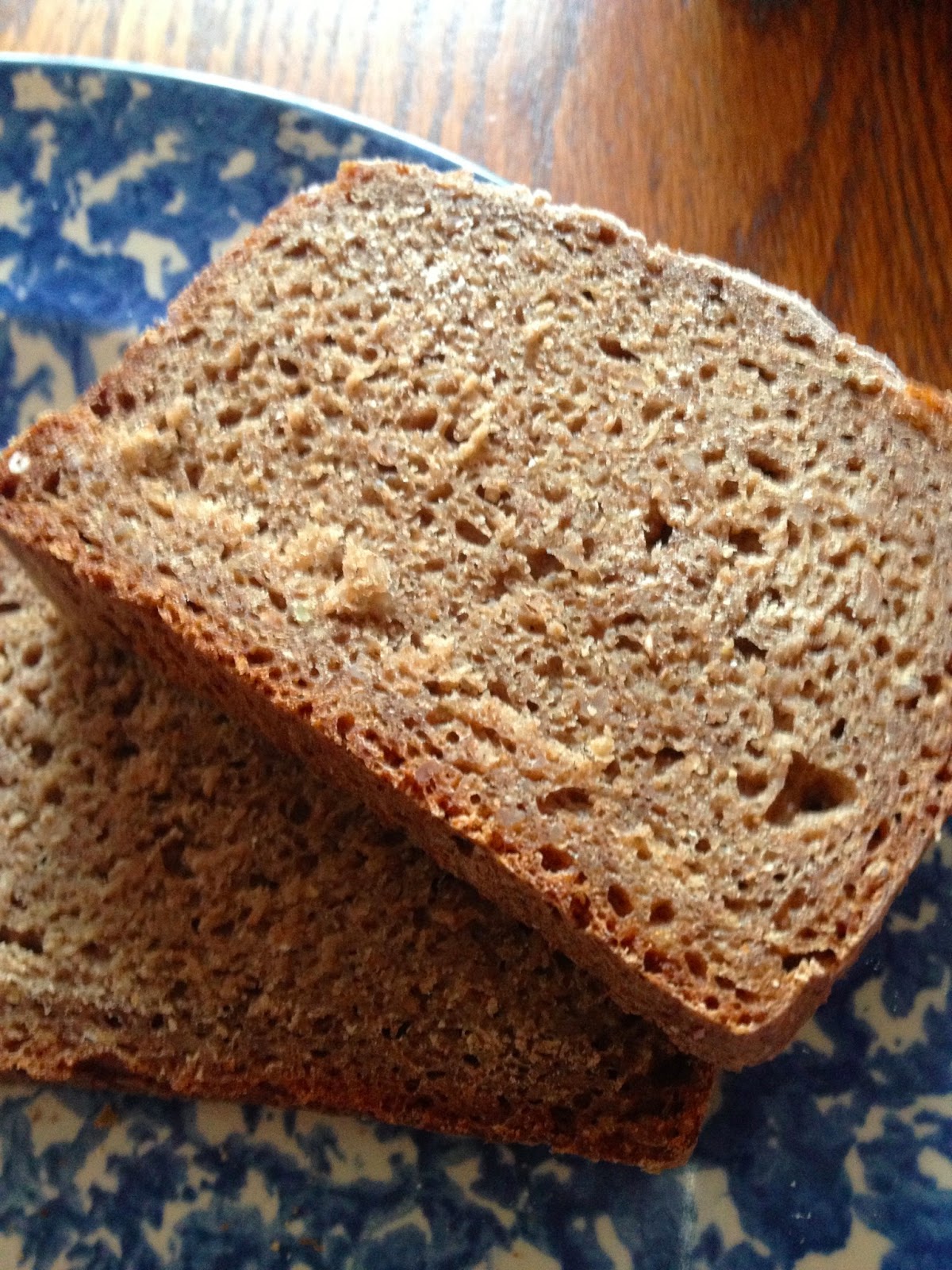
ANYWAY, this was not an easy meal to put all together, although the cooking of it all was easy.  And after all of that rigmarole, we were very underwhelmed.  The bread was incredibly dense (I will probably make croutons with the leftovers), the mulgikapsad was rather bland (both in color and in taste), and the blood sausage was also bland.  I really didn't like the texture either, and I couldn't help but gag a little when I thought about how it was made mostly of congealed blood.  All in all, I was disappointed.

Estonian Black Bread


Ingredients:
Soaker
- 2 1/4 oz. cracked rye
- 4 oz. cool water
Rye Sour
- 9 oz. whole rye (pumpernickel) flour
- 8 oz. water
- 1/2 oz. ripe sourdough starter
Dough
- 6 oz. water
- all the soaker
- all the rye sour
- 7 1/2 oz. ripe sourdough starter
- 1 1/2 tsp. blackstrap molasses
- 4 1/2 oz. high-gluten flour
- 1 tsp. whole fennel seed, coarsely ground
- 2 tsp. yeast (not rapid rise)
- 2 tsp. salt
- 1 T. cocoa powder

Directions:
1) Combine the cracked rye and water in a small, nonreactive container.  Cover and let soak overnight.


Soaker before
Soaker after sitting overnight

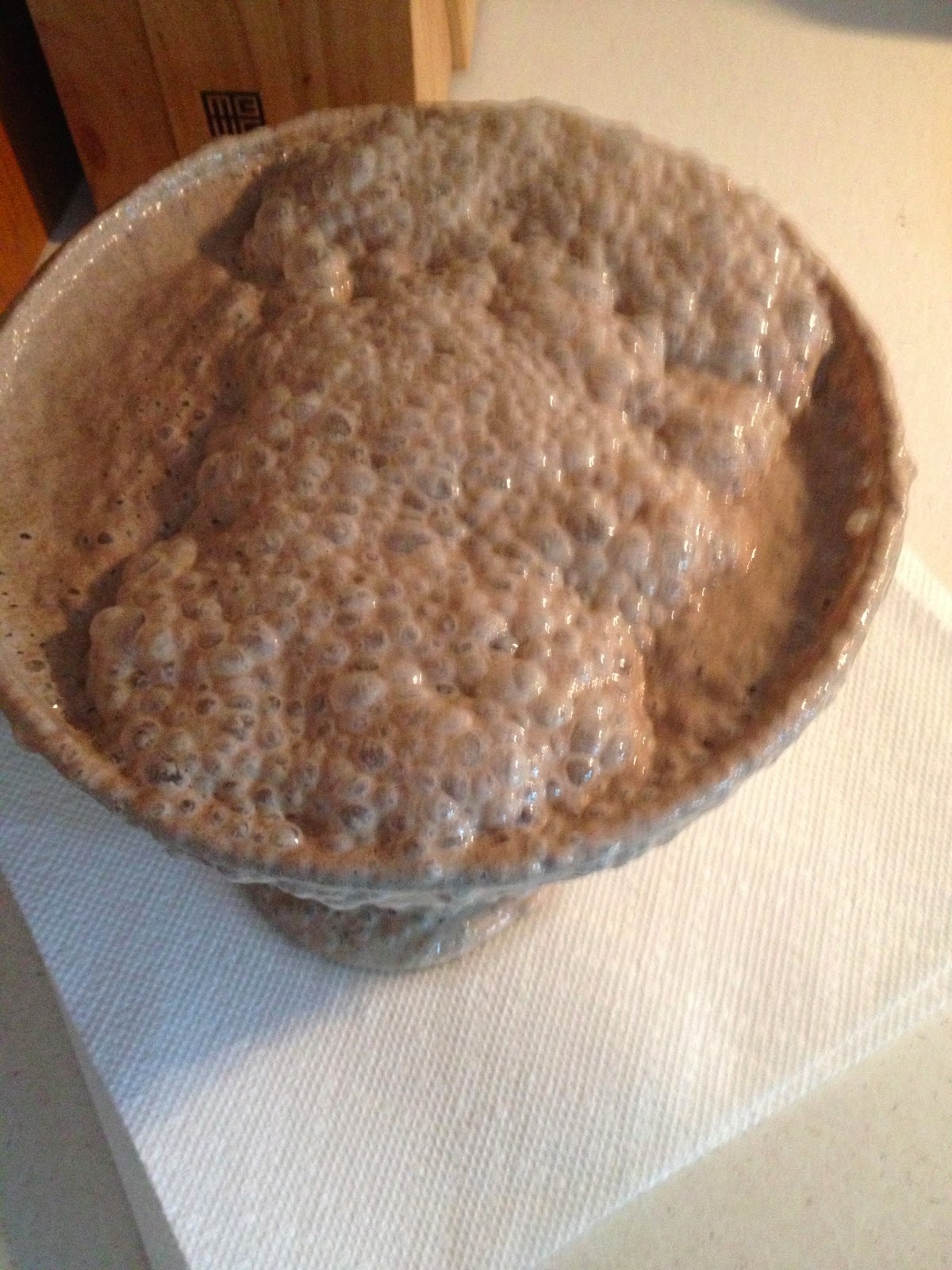
2) Combine the rye flour, water and starter and mix until smooth. Dust the surface with rye flour, cover and let stand for 12-15 hours.
Rye sour before
Rye sour after 12-15 hours

3) Coat the Pullman pan and lid with vegetable spray.  Dust the pan with rye flour.
4) Combine all the ingredients in a large bowl.  Knead for 8 minutes.  The dough will be VERY sticky.
5) Transfer the dough to the prepared Pullman pan, leveling it off.  Dust with rye flour and slide the lid on the pan.  Let rise until it is within one inch of the top.


6) Preheat oven to 500 degrees. Place pan in oven and bake 15 minutes.  Reduce temperature to 400 degrees and back another 15 minutes.  Remove the lid, reduce the temperature to 325 degree and bake until done, about 45 more minutes.
7) Remove the bread from the oven and immediately turn it out of the pan onto a wire rack to cool completely.  Let sit for 24 hours before slicing.


Mulgikapsad


Ingredients:
- 2 1/2 lb. lean pork, in one piece
- 4 1/2 c. sauerkraut
- 3/4 c. uncooked barley
- 1 bay leaf
- salt and pepper
- boiling water

Directions:
1) Put meat in a heavy casserole.  Cover meat with sauerkraut.  Rinse barley in cold water and add to meat with bay leaf, salt and pepper.


2) Pour in boiling water until barley is covered.  Cover.  Simmer over low heat until meat is tender, about 1 1/2- 2 hours.  Stir, adjust seasoning, and serve.